





Six VLCCs! Two Swiss Owners Place Bets on This Chinese Shipyard
Source:CNSS
2026-04-16
The global Very Large Crude Carrier (VLCC) newbuilding market is heating up once again, with two Swiss shipowners independently placing their bets on the same Chinese shipyard.
Advantage Tankers' decision to order tankers in China marks a rare departure from its established practice in the shipbuilding market.
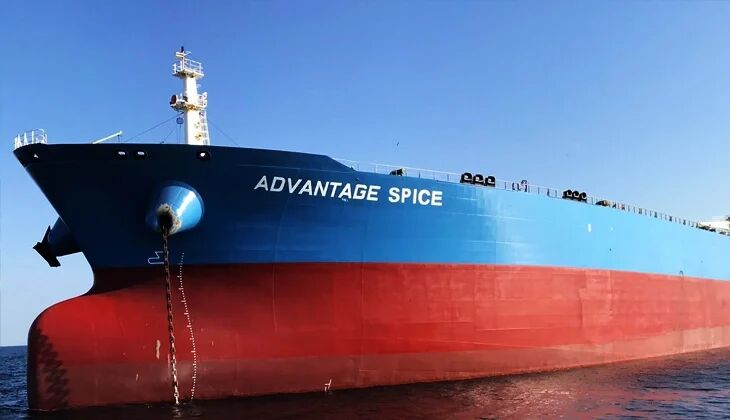
Shipbuilding industry sources indicate that the company has broken with its tradition of ordering vessels at South Korean yards, instead turning to Dalian Shipbuilding Industry Co. (DSIC) for the construction of two 307,000 dwt LNG dual-fuel ready VLCCs. This move signals renewed international recognition for Chinese shipyards in the high-value-added tanker segment.
The two vessels are scheduled for delivery in the second quarter of 2028 and the third quarter of 2029 respectively, with Advantage Venture delivering first, followed by Advantage Voyager.
Advantage Tankers CEO Tugrul Tokgoz has confirmed the order at Dalian. She stated: "We are ordering these newbuildings against charter requirements from first-class counterparties, and the vessels have already been fixed to a major oil company."
Pricing has not yet been disclosed. Brokers estimate the cost of a conventionally fueled VLCC newbuilding at Dalian at approximately $123 million, with the LNG dual-fuel capability adding an additional premium of $19 million to $20 million.
Another Swiss owner, Mercuria Energy, has also returned to Dalian Shipbuilding, signing contracts for four 307,000 dwt VLCCs and two 115,000 dwt LR2 tankers, with a total value approaching US$650 million. Delivery is scheduled for 2029.
Shipbrokers report that Mercuria is paying $123 million per VLCC and approximately $75 million per LR2 tanker, bringing the total consideration to roughly $642 million.
The four VLCCs will be fitted with scrubbers, and the contract comprises two firm orders plus two optional units. For a trading house that currently operates no owned VLCC tonnage, this order represents a significant strategic move.
The two product tanker orders bring Mercuria's total LR2 newbuilding backlog at this yard to four vessels.
In the six months preceding the outbreak of the Middle East conflict, VLCC orders had accumulated at record levels amid a persistently strong freight market. While market activity has cooled somewhat since then, there are indications that business is beginning to pick up once again.
Last week, Stealth Maritime placed an order with Hanwha Ocean for two newbuildings, marking its return to the VLCC market after a 20-year hiatus. AET Tankers also recently contracted a series of LNG dual-fuel VLCC newbuildings at Hengli Heavy Industries; the exact number remains unclear, with sources suggesting between four and six vessels.
The VLCC newbuilding market has entered historic territory, with the combined order volume of the fourth quarter of 2025 and the first quarter of 2026 alone surpassing the full-year total of any previous calendar year.
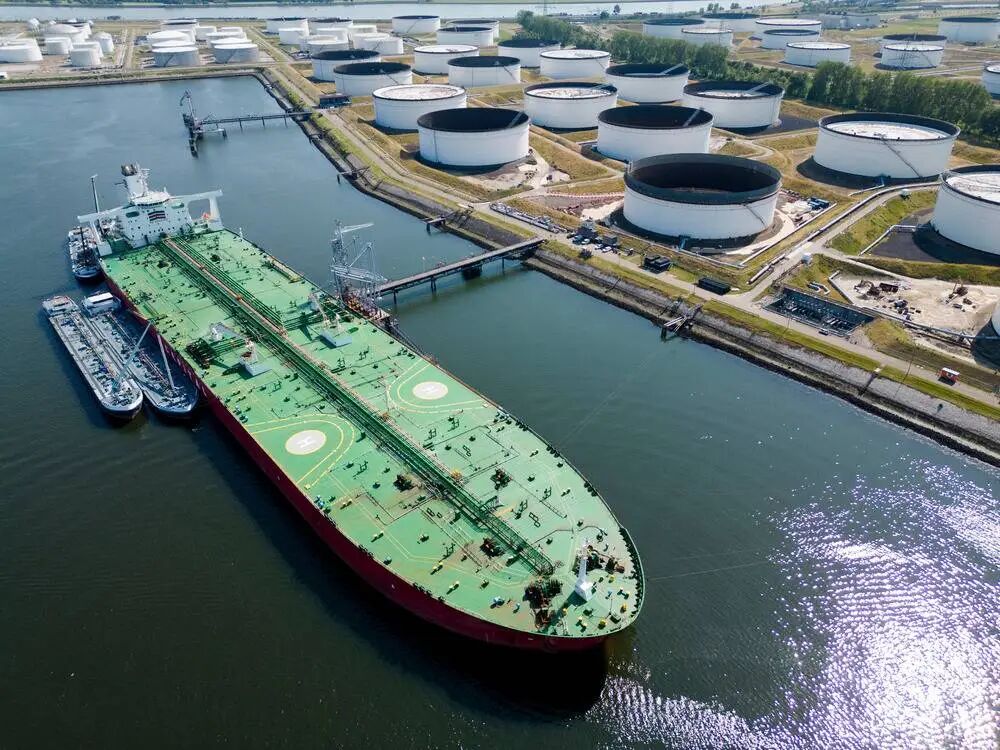
Hartland notes that the VLCC orderbook-to-fleet ratio has climbed from 10% to 26% in just 15 months, compared to a low of approximately 1% in mid-2023. Hartland stated: "We estimate that approximately 125 VLCCs were ordered in Q4 2025 and Q1 2026 combined, exceeding the historical record for any full calendar year." The firm points out that the previous record was 108 vessels set two decades ago in 2006.
Data from Veson Nautical shows that first-quarter 2026 newbuilding orders reached 33.3 million dwt, surpassing the already impressive 27.2 million dwt recorded in the fourth quarter of 2025. Crude tankers accounted for 90% of first-quarter orders, representing a fivefold increase over the same period in 2025. Meanwhile, newbuilding prices for large crude carriers and medium-sized product tankers rose by approximately 7% during the quarter.
Sentosa notes that this ordering trend reflects a confluence of structural forces. The brokerage stated: "It is underpinned by a combination of factors, including sustained strength in crude tanker earnings from the second half of 2025 into 2026, an aging global fleet, and improved confidence in the long-term outlook for oil demand."
The Baltic and International Maritime Council (BIMCO) confirms that records are being broken across the board. Filipe Gouveia, Shipping Analysis Manager at BIMCO, stated: "In the first quarter of 2026, newbuilding contracting increased by 40% year-on-year to 17.6 million compensated gross tonnes, driven primarily by a tripling in new tanker orders and a rebound in LNG carrier contracting."
Overall, tankers accounted for 32% of total contracted volume in the first quarter, the highest share since the second quarter of 2017. Gouveia characterized the current situation as "the highest quarterly volume of crude tanker contracting on record."
Hot News