




World's Largest Flag State Acts: Liberia Formally Rolls Out Electronic Seafarer Certificates
Source:CNSS
2026-04-30
The Liberian Registry, the world's largest ship registry, announced on April 29 the official launch of electronic seafarer certificates. This marks a significant step in the registry's digital transformation and sets a new standard for seafarer services within the global shipping industry.
Seafarers serving aboard Liberian-flagged vessels who apply for new credential documents will now receive electronic versions of their official certificates, including seafarer identity documents, certificates of competency, special qualification certifications, and seafarer record books. These electronic documents can be accessed directly on mobile devices through the Registry's newly launched dedicated mobile application, SEA360.
Seafarers who already hold traditional paper certificates may also apply through the Registry to receive their electronic records. The SEA360 application is now available for download on both the Apple App Store and Google Play Store.
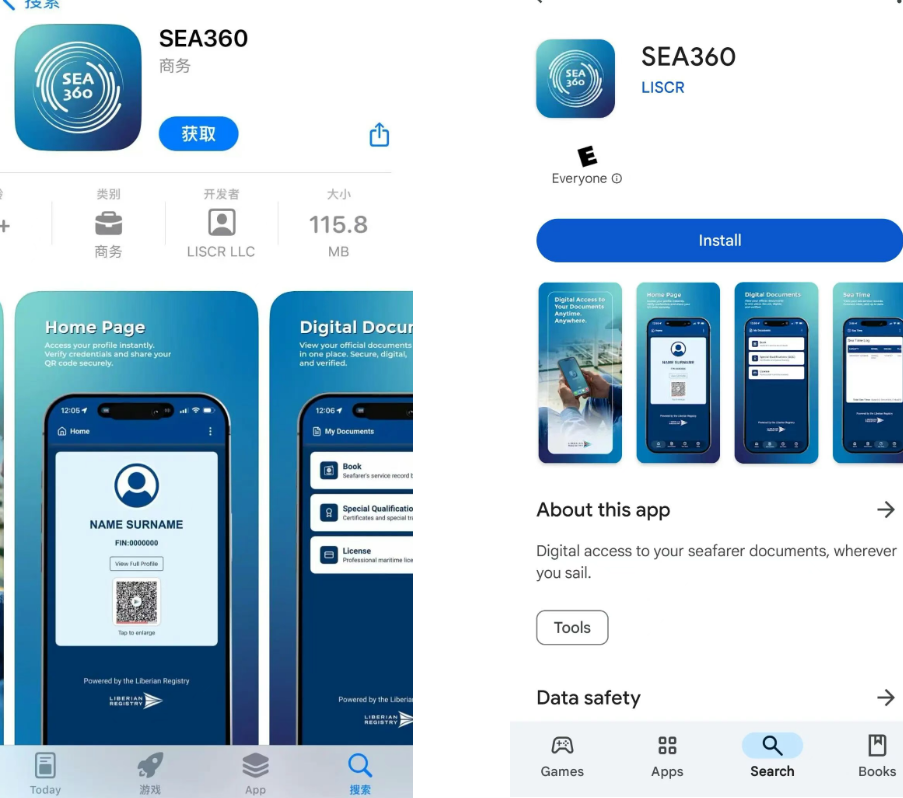
Electronic certificates issued through SEA360 carry the same legal validity as their paper counterparts and contain QR codes enabling instant verification within the Registry's system. Seafarers can present their electronic certificates directly to Port State Control officers and shore-based designated persons anywhere in the world.
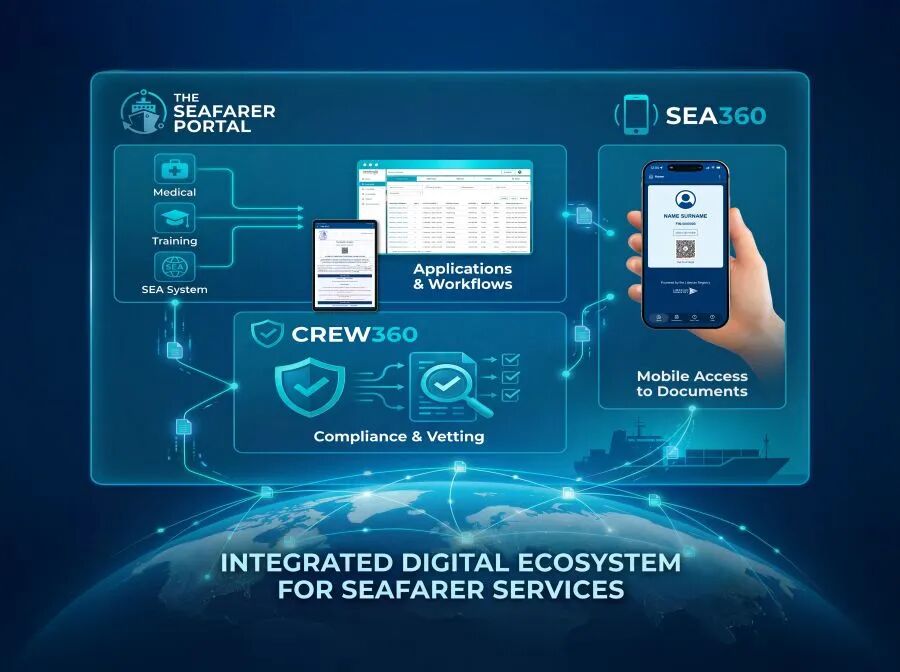
Concurrently with the launch of SEA360, the Liberian Registry has migrated and integrated its electronic seafarer application system into the Seafarer Portal. This fully integrated platform seamlessly connects the electronic seafarer application system, medical certificate authentication, and training centre programmes.
This upgrade also introduces the Crew360 Compliance Engine—a compliance-focused platform designed to conduct additional auditing and verification on every seafarer application. The engine performs enhanced review and verification checks on each application prior to certificate issuance, thereby ensuring the authenticity of Liberian-issued certificates while maintaining efficient processing workflows for authorized users.
All seafarer credentials issued from the Seafarer Portal will, in addition to the electronic certificate, feature QR codes on paper documents—including application acknowledgment receipts. Electronic certificates complement rather than replace paper documents, thereby enhancing regulatory oversight and document security standards across the entire fleet while ensuring continuity between paper and digital records.
The significance of introducing electronic seafarer certificates lies in the shipping industry's growing momentum toward secure, real-time digital documentation. Paper-based certificate processes have long been criticized for inefficiencies, risks of forgery, and administrative delays—issues that are particularly acute for a globally mobile seafarer workforce.
By combining mobile access with QR code verification, the Liberian Registry aims to streamline compliance processes while strengthening document authenticity across its fleet. Given Liberia's position as the world's largest ship registry, this move is likely to accelerate the wider industry adoption of electronic seafarer documentation and set a benchmark for how flag states manage seafarer records in the future.
Hot News