




Cracking Down on Maritime Fraud and Flag Abuse! IMO Adopts First-Ever Global Guidelines
Source:CNSS
2026-04-20
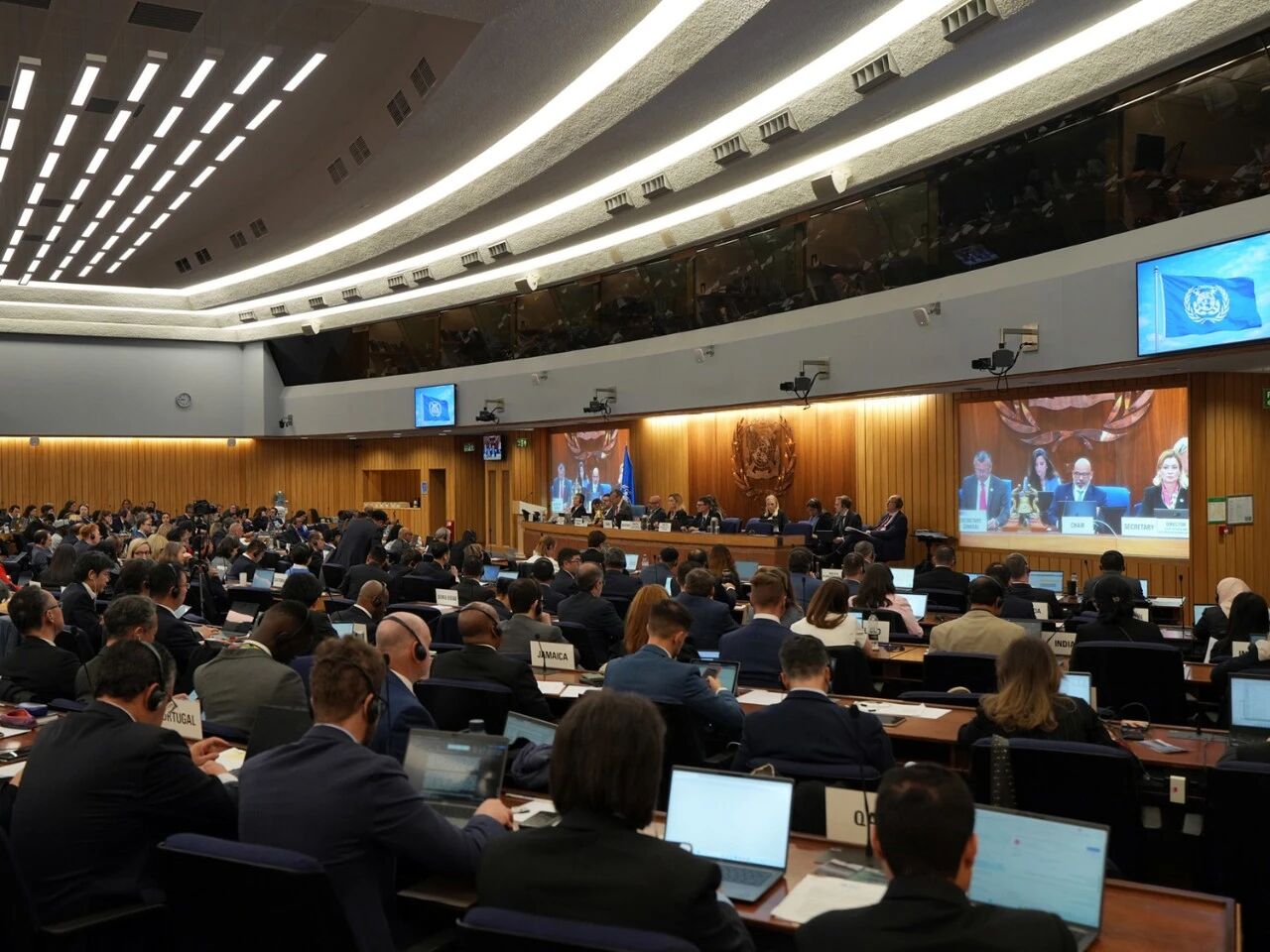
The 113th session of the International Maritime Organization (IMO) Legal Committee convened in London from April 13 to 17, 2026. The session approved the world's first set of international guidelines aimed at combating maritime fraud and curbing the abuse of ship registries. Concurrently, the Committee reached significant resolutions on a range of critical issues, including the governance of substandard shipping, navigational safety in the Strait of Hormuz, the surge in cases of seafarer abandonment, and liability and compensation mechanisms for accidents involving alternative fuels.
I. Adoption of First-Ever International Guidelines to Address Regulatory Gaps in Ship Registration
The IMO Legal Committee adopted a comprehensive new set of guidelines designed to enhance transparency and due diligence in ship registration processes, thereby preventing fraudulent registration and the abuse of flags. This initiative addresses a critical regulatory void, as the global shipping industry currently lacks a unified and binding international framework governing ship registration. The guidelines encompass five core areas:
1.Implementation of legislative governance and effective oversight over ship registration entities;
2.Establishment of quality assurance procedures covering the entire ship registration process;
3.Strengthening of verification and identification measures for ship ownership information;
4.Rigorous vetting of ship identity and scrutiny of registration eligibility;
5.Standardization of information source management and inter-agency information sharing.
According to data disclosed by the Committee, the issue of fraudulent ship registrations has continued to deteriorate since the previous session in 2025. Over the past year, a total of 529 vessels have been confirmed as unlawfully flying the flag of another state. Nearly 40 IMO Member States have reported instances of their national flags being misappropriated by criminal networks without authorization or knowledge, severely disrupting the maritime order and threatening navigational safety and the protection of the marine environment.
In his closing remarks, IMO Secretary-General Arsenio Dominguez stated that the introduction of these guidelines represents a significant step toward enhancing the credibility of ship registration systems. He noted that this initiative directly supports navigational safety, marine environmental protection, and seafarer welfare, and is crucial for upholding the overall safety and security of international shipping, while also effectively mitigating systemic risks arising from fraudulent registration.
II. Re-establishment of Specialized Working Group to Continue Addressing Substandard Shipping
In response to the escalating issues of substandard vessels and illegal operations, the Legal Committee resolved to re-establish a Correspondence Group to advance the "Regulatory Scoping Exercise." This effort will comprehensively review existing IMO conventions, regulations, and the regulatory tools available to Member States, with the objective of systematically developing targeted measures to combat various forms of illegal maritime operations, including substandard shipping.
The Correspondence Group will be tasked with formulating draft terms of reference for a dedicated Working Group to be established at the next session. This initiative aims to facilitate the development of a more actionable international regulatory framework, thereby legally constraining the operational space for substandard vessels.
III. Strong Condemnation of Threats in the Strait of Hormuz and Reaffirmation of Inviolable Freedom of Navigation
The Committee expressed grave concern regarding the regional maritime security situation and adopted a strongly worded statement condemning threats and attacks targeting merchant vessels in the Arabian Sea, the Gulf of Oman, and the Gulf region, particularly in and around the Strait of Hormuz and its adjacent waters.
The Committee explicitly:
Strongly condemned threats attributed to the Islamic Republic of Iran concerning the deployment of mines in the Strait of Hormuz and surrounding waters, especially within Traffic Separation Scheme (TSS) areas;
Condemned media reports regarding the imposition of transit fees and discriminatory measures against vessels navigating the Strait of Hormuz;
Noted that such actions contravene the objectives of the IMO and the principles of relevant international law.
The Committee further reaffirmed that the right of transit passage through the Strait of Hormuz is protected under international law, must be fully respected, and shall not be impeded.
IV. Seafarer Abandonment Cases Reach Record High; IMO Urges Enhanced Implementation and Rapid Response
The Committee noted with heightened vigilance the alarming escalation in the number of seafarer abandonment cases globally. According to the joint IMO/International Labour Organization (ILO) database, 410 new cases of seafarer abandonment were recorded in 2025, affecting over 6,000 seafarers—a figure substantially exceeding any previous annual total. Among these, 185 cases lacked the mandatory financial security required under applicable conventions, leaving seafarers without guaranteed basic necessities or repatriation rights.
This trend has continued into 2026, with 103 new abandonment cases already reported between January 1 and the commencement of the session.
In response, the Committee urged Member States to expedite ratification of the Maritime Labour Convention, 2006 (MLC) and its 2014 amendments, and to strictly implement the 2022 Joint ILO/IMO Guidelines on the Handling of Seafarer Abandonment Cases. The Committee emphasized that port States, coastal States, and flag States each bear legal obligations to protect seafarer rights and must enhance cooperation and rapid response mechanisms to properly address abandonment incidents.
To improve response efficiency, the Committee requested the IMO/ILO Joint Tripartite Working Group (JTWG) to develop a clear and actionable Standard Operating Procedure (SOP) delineating specific action steps, timelines, and trigger conditions. This SOP will enable competent authorities to intervene swiftly and precisely in emergency abandonment situations without imposing undue administrative burdens. Furthermore, the Committee tasked the specialized Working Group with exploring mechanisms—potentially through existing IMO safety reporting interfaces—to strengthen the verification of financial security certificates and close existing regulatory loopholes.
V. Confirmation of Legal Gaps in Liability and Compensation for Alternative Fuel Incidents; Initiation of Specialized Legislative Research
With the acceleration of the green shipping transition, the deployment of alternative fuels such as ammonia, methanol, and hydrogen is becoming increasingly widespread. However, the mechanisms governing liability determination and damage compensation for related incidents remain inadequately defined.
Following deliberations, the Committee reached consensus that:
A discernible regulatory gap exists in the realms of liability and compensation concerning incidents involving alternative marine fuels;
Existing international liability and compensation regimes do not adequately address the unique safety and environmental risks associated with alternative fuels;
This gap must be addressed expeditiously to ensure legal certainty and to provide full and effective compensation for victims of such incidents.
Consequently, the Committee decided to establish a dedicated Correspondence Group to conduct an in-depth study on whether an independent liability and compensation regime for alternative fuels is required, or whether targeted amendments to existing international conventions are more appropriate. The aim is to ensure that the full lifecycle risks associated with the use of alternative fuels onboard vessels are comprehensively addressed at the legal level. This Group will continue its research and report its findings to the next session of the Legal Committee.
The IMO Legal Committee affirmed that the suite of resolutions and outcomes emanating from this session will systematically enhance global shipping governance and strengthen safeguards related to safety, environmental protection, seafarer rights, and the rule of law.
Hot News