





The Real Test for Supply Chains May Come in 2028, Not the Middle East Crisis
Source:CNSS
2026-04-29
Although container shipping volumes demonstrated unexpected resilience during the first quarter of 2026 amid Middle East geopolitical conflict, industry analysts and recent academic research have issued a warning: the next systemic crisis for global trade may stem not from a sudden geopolitical "black swan," but from a long-neglected "gray rhino"—the persistent stagnation of port infrastructure.
Robbert van Trooijen, an independent consultant and former Maersk Asia-Pacific President, argues that once the current Strait of Hormuz conflict subsides, global trade will face a far more fundamental bottleneck: the capacity of existing terminals at major gateway and hub ports is approaching a saturation point.
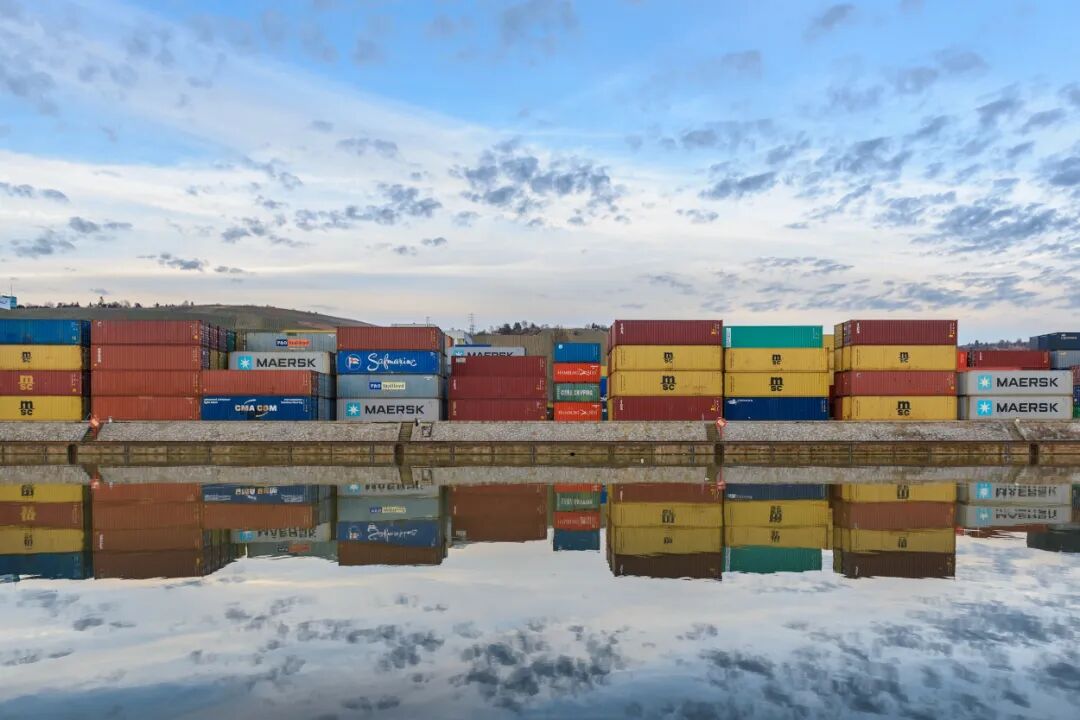
Industry data indicates that global trade is heading toward an irreconcilable contradiction. On one hand, orders for ultra-large containerships are piling up at shipyards; on the other, new berths capable of handling these mega-vessels are in critically short supply. While the industry is leveraging automation and efficiency improvements to squeeze potential from existing facilities, genuinely new physical throughput capacity remains negligible across the global map.
This disconnect is vividly reflected in recent industry capital movements. Despite a wave of mergers and acquisitions—such as CK Hutchison's planned sale of some port assets—industry insiders note that simply changing the ownership of existing facilities does nothing to expand global trade's actual handling capacity.
Van Trooijen cautions that this situation could lead to a predicament: the industry is busily assembling a massive new-generation fleet at record speed, but before long, there will not be enough space at ports worldwide to accommodate them. Without a significant increase in investment in new terminal infrastructure, supply chain congestion bottlenecks will shift from sea to shore, becoming a critical factor constraining future global economic growth. "We are indeed building a fleet, but soon there will be no 'berths' in the ports for them," he stated.
Terminal investment is far from unprofitable; quite the contrary, its returns are astonishing. According to relevant research, APM Terminals recorded a return on invested capital (ROIC) as high as 16.1 percent in the fourth quarter of 2025. This figure far exceeds most other segments within the shipping industry and sufficiently demonstrates the immense commercial appeal of terminal infrastructure. Yet high profitability has not translated into large-scale newbuild investment. Van Trooijen identifies a key factor: the "incumbent's dilemma."
While adding new terminal capacity benefits the global economy by improving competitive efficiency, this process would, at least in the short term, dilute the high returns currently enjoyed by existing operators. In certain critical markets, logistics bottlenecks are not a nuisance but a source of windfall profits. This creates a perverse incentive: incumbents lobby against new projects, effectively sacrificing the smooth flow of trade to protect their own profit margins.
The investment gap is most pronounced in the Southern Hemisphere. Lars Jensen noted in early March that demographic shifts suggest Latin America and Africa will become the next significant trade frontiers. However, it is precisely in these regions where opposition to "carrier-owned terminals" is most vocal. Local businesses frequently lobby against shipping lines' participation in terminal construction, arguing that such vertical integration hinders fair competition—a stance that is understandable yet carries a certain protectionist undertone.
Van Trooijen contends that shipping lines are, in fact, the entities most motivated to drive capacity growth, as they require adequate berths to keep their ever-expanding fleets operational. He points out that any legitimate anti-competitive concerns can be readily addressed by incorporating clear and enforceable neutrality clauses into concession agreements. Such provisions can ensure that even if a terminal is owned by a shipping line, it must operate as open-access infrastructure, providing equal service to all users across the market. In other words, there is no inherent link between ownership and exclusive use.
From groundbreaking to operational launch, a new terminal project typically takes three to five years. Van Trooijen warns that if construction does not begin now, the impact of "landside bottlenecks" on global supply chains by 2028 and beyond could make the current disruptions in the Red Sea or Strait of Hormuz look, by comparison, like a minor logistical hiccup.
He thus calls for the future of global trade to transcend the protectionist rhetoric upheld by incumbent local players and actively embrace the capital strength and operational dynamism that the combination of shipping lines and terminals brings. The objective conditions are already in place—substantial returns are evident, sustained demand growth is undeniable, yet berths remain sorely lacking.
Hot News