


A US$21.6 Billion Major Pivot! Liner Giant Bets Big on Bulk Carriers and Tankers
Source:
2026-09-15
According to Korean media reports, the global shipping market is standing at a new turning point. With supply chain restructuring and growing geopolitical uncertainty, South Korean shipping giant HMM has proposed a mid- to long-term investment plan of approximately US$21.6 billion (29 trillion won), attempting to adjust its container fleet operations while expanding its bulk carrier, gas carrier, tanker, and terminal businesses, and changing its business structure, which is overly dependent on a single ship type—containers.
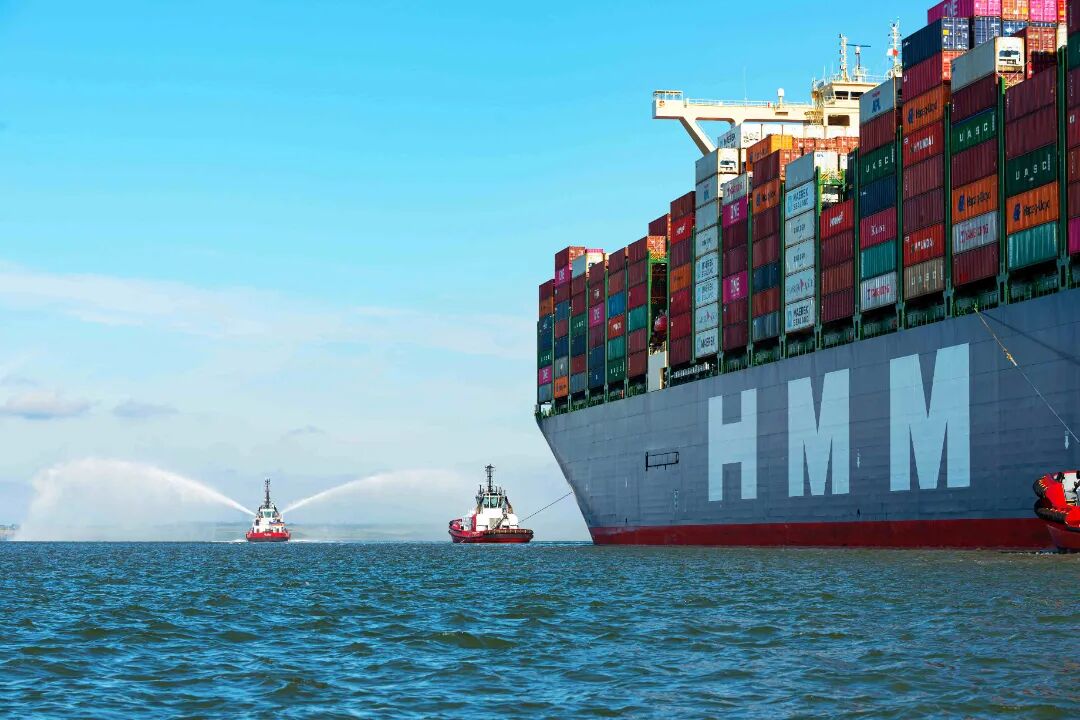
Large container ships put on hold, bulk shipping becomes second profit axis
On the container ship side, HMM's newbuilding strategy has clearly shifted. According to multiple industry sources, HMM originally planned to order more than 10 13,000 TEU LNG dual-fuel container ships in the second half of this year, but subsequently put the project on hold and instead shifted its focus to other ship types such as Suezmax tankers, MR product tankers, VLGCs, and LNG carriers. In February this year, HMM warned that a large number of new container ship deliveries, combined with weak demand growth, could lead to overcapacity in the industry.
The bulk shipping business has become HMM's second profit axis "beyond containers." According to Korean media reports, HMM's bulk division revenue in the first half of the year was approximately US$690 million (961.3 billion won), accounting for about 15.7% of total revenue of approximately US$4.41 billion (6.1207 trillion won); bulk operating profit was approximately US$170 million (239.4 billion won), accounting for about 38.4% of total operating profit of approximately US$450 million (623.2 billion won).
Year on year, bulk operating profit increased from approximately US$50 million (68.5 billion won) to approximately US$170 million (239.4 billion won), more than tripling; during the same period, container operating profit fell from approximately US$550 million (765.8 billion won) to approximately US$280 million (383.8 billion won), nearly halving. The bulk business partially offset the decline in container profits.
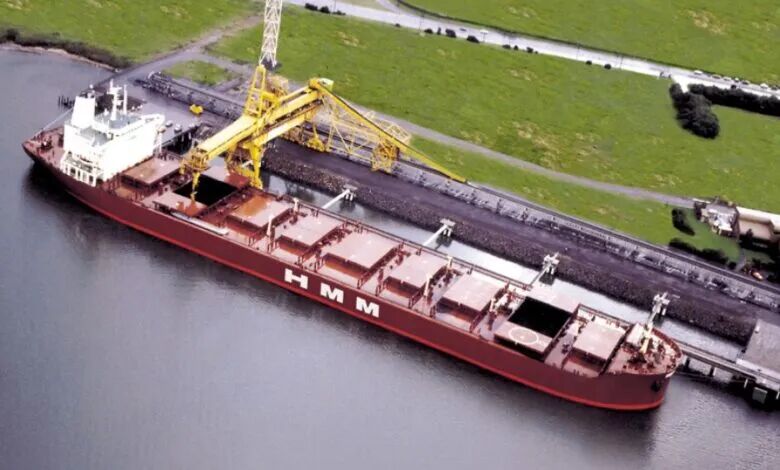
The expansion of the bulk fleet is also accelerating. HMM's bulk division fleet has increased from 44 vessels at the end of March last year to 61 vessels at the end of May this year, and it plans to expand to 13.52 million DWT and 110 vessels by 2030. According to its mid- to long-term strategy, HMM plans to expand its container fleet from the current 73 vessels to 166 vessels, and its bulk fleet from 50 vessels to 110 vessels.
HMM recently signed a long-term transport contract worth approximately US$3.39 billion with Brazilian mining giant Vale, under which it will gradually deploy eight 210,000 DWT Newcastlemax vessels starting in 2030, each with a contract period of 25 years. In June this year, HMM decided to invest approximately US$1.20 billion to build eight bulk carriers and two gas carriers.
First VLCC order placed with a Chinese shipyard, tanker orders land intensively
On the tanker side, in October last year, HMM placed an order with HD Hyundai Heavy Industries for two VLCCs, at a unit price of approximately US$128 million and a total price of approximately US$256 million, with delivery expected in the second half of next year. In May this year, HMM placed an order for four more VLCCs with Hengli Heavy Industries. People familiar with the matter said the unit price of these VLCCs is close to US$125 million, with a total order value of approximately US$500 million, and delivery is expected around 2029. So far, HMM's total number of newbuilding VLCCs has reached six.
An HMM spokesperson confirmed that, as part of its mid- to long-term growth strategy, the company is actively expanding its dry bulk and tanker businesses and continuously increasing fleet capacity through various means, including secondhand vessels and newbuildings. It is reported that HMM currently operates 14 VLCCs, 13 of which are owned vessels, but all of them previously came from Japanese and Korean shipyards. This move to place an order with Hengli Heavy Industries marks the first time HMM has awarded a VLCC order to a Chinese shipyard.
Separately, according to shipbroker Bancosta, HMM recently ordered 2+2 50,000 DWT MR product tankers from HD Hyundai Heavy Industries, at a unit price of US$52 million; if the options are exercised, the total value of the four newbuildings will be approximately US$208 million. Including this order for 2+2 MR product tankers, HMM has already ordered more than 10 newbuildings from HD Hyundai affiliates this year. Other projects include 10 2,800 TEU container ships at HD Hyundai Heavy Industries and two 90,000 cubic meter LPG dual-fuel-powered very large gas carriers (VLGCs) at HD Hyundai Samho. Delivery of this batch of newbuildings is scheduled to begin in 2028.
As a leading South Korean shipowner, HMM invested approximately US$1.63 billion in vessel acquisitions in the first half of this year. As of the end of June 2026, HMM had 45 newbuildings already under contract and under construction, with a total construction value of approximately US$1.35 billion.
HMM's goal of a 110-vessel fleet is not merely quantitative expansion, but also an experiment in reforming its profit structure. In the future, whether non-container businesses such as bulk, tankers, and gas carriers can continue to generate stable profits across different market cycles will determine the ultimate quality of HMM's approximately US$21.6 billion investment plan.
Hot News