


Net Profit Soars 890%! Riding the VLCC Super Rally, This Tanker Company Is Raking It In
Source:
2026-10-30
On the 27th, The National Shipping Company of Saudi Arabia (Bahri) released its third-quarter results. In the quarter, the company's revenue was SAR 14.83 billion (approx. US$3.95 billion), up 504% year on year; net profit attributable to shareholders was SAR 5.08 billion (approx. US$1.36 billion), up 890.6% year on year; and operating profit was SAR 5.02 billion (approx. US$1.34 billion), up 737.6% year on year.
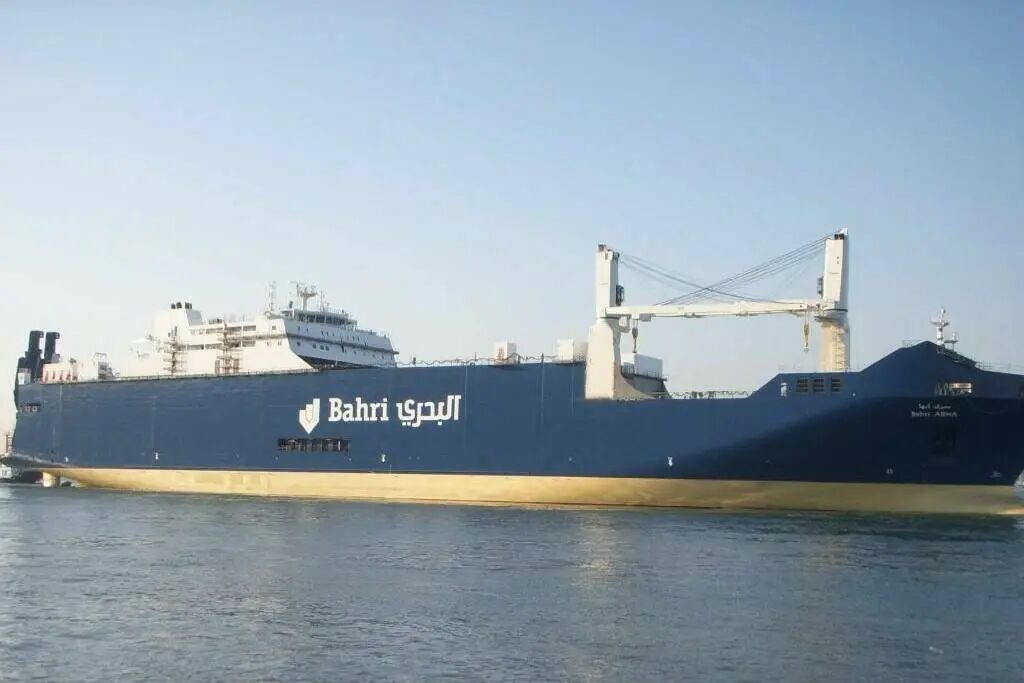
Bahri Oil was the main driver of revenue and profit growth, with its revenue surging 913% year on year in the quarter. The company said in its financial report: “The strong results were mainly due to a sharp rise in actual very large crude carrier (VLCC) freight rates, which was mainly because regional shipping disruptions and rising maritime security risks constrained vessel capacity supply.”
In addition to owning 49 VLCCs, Bahri said it had significantly increased charter-in activity to meet customer demand.
As the VLCC market climbed to astronomical highs in recent months, rising chartering costs squeezed the margins of chartered-in capacity, dragging Bahri Oil's EBITDA margin for the quarter down by 17 percentage points to 37%.
However, despite margin pressure, the business still performed significantly better than last year and also better than the conflict-affected second quarter of 2026: Bahri Oil's third-quarter revenue rose 182% and EBITDA rose 94%.
In the quarter, Bahri acquired three second-hand mid-sized gas carriers, marking its entry into a new market. One was delivered in September, and the remaining vessels are expected to join the fleet in Q4 2026 and Q1 2027.
According to the International Maritime Organization's (IMO) confirmed list of attacks, Bahri's “Wedyan” was damaged in an attack on July 6, and “Sidr” was damaged in an attack on August 31 that killed two Filipino seafarers. Since the start of the US-Iran conflict, the IMO has repeatedly warned shipping companies not to transit the Strait of Hormuz, citing not only the risk of attacks but also the recently emerged risk of naval mines.
Despite the risks to vessels and crew, Bahri continued to operate its ships in the Arabian Gulf. According to an analysis published by Bloomberg on October 23, in September Bahri ranked second in the volume of oil transported through the Strait of Hormuz, but was far behind first-ranked Sinokor.
In addition, a total of nine vessels of Bahri and its subsidiaries were included on a blacklist of 125 vessels compiled by Iran's Persian Gulf Strait Authority (PGSA).
Hot News