


COSCO Shipping’s First Engine Company Established!
Source:
2026-10-30
According to information on the official Qichacha website, Yangzhou COSCO Shipping Engine Co., Ltd.—the first engine company under COSCO Shipping Group—was established on October 22, with registered capital of RMB 30 million. Its registered address is No. 1 Yingzhou Road, Daqiao Town, Jiangdu District, Yangzhou. The company is indirectly wholly owned by China COSCO Shipping Corporation Limited.
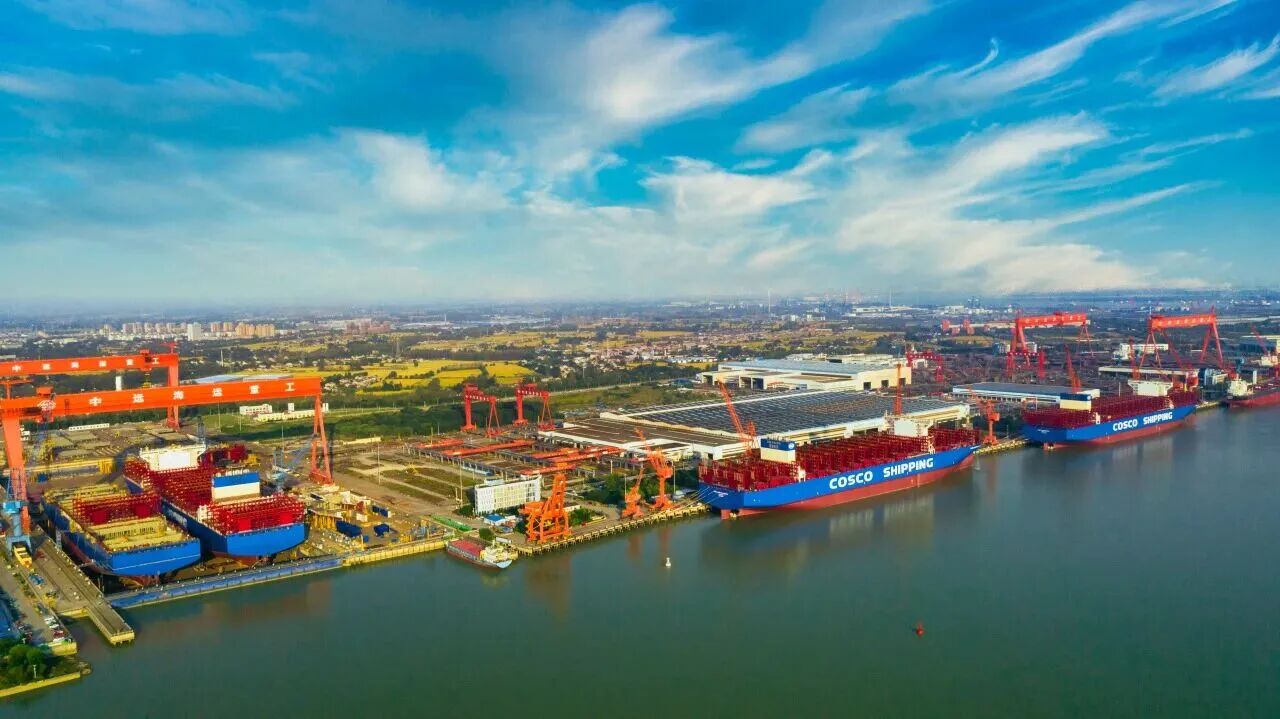
In terms of business scope, the company covers general items including the manufacturing of marine supporting equipment, the manufacturing and sales of offshore engineering equipment, the manufacturing of metal structures, the sales and repair of electrical equipment, and the import and export of goods and technologies. Its business scope is clearly oriented toward ship power systems and core offshore engineering supporting fields.
This is not an isolated business registration. Within the development trajectory of COSCO Shipping Group’s shipbuilding industrial chain in recent years, the establishment of Yangzhou COSCO Shipping Engine Co., Ltd. in essence marks a key step for its marine main engine project from a “framework agreement” to “substantive operation.”
According to Yangzhou Net, on July 11, at the Yangzhou High-tech Ship and Offshore Engineering Equipment Industry Investment Promotion Conference, COSCO Shipping Heavy Industry and the Yangzhou Municipal Government signed a framework agreement for a marine main engine project, planning to invest about RMB 5 billion and planning an annual production of 80 to 120 methanol dual-fuel and clean-energy marine main engines, aiming directly to “fill the gap in Yangzhou’s supporting capacity for core marine main engines.” Today, the establishment of the engine company marks a clear operating vehicle for this project.
Yangzhou is one of Jiangsu’s important shipbuilding bases. According to public industry data, the city has 89 shipbuilding and offshore engineering enterprises above designated size, an annual shipbuilding capacity of 8 million DWT, an output value exceeding RMB 50 billion in 2025, and the number of newbuilds ranks first in the province.
However, as a high-tech, high-value-added core component accounting for 10% to 15% of total ship cost, the marine main engine has long been one of the most prominent “missing links” in Yangzhou’s and even China’s shipbuilding industrial chain. Industry data show that marine main engines have high technical barriers and have long been dominated by a few international giants. Although Yangzhou’s shipbuilding industry is large in scale, its main engine supporting capacity is highly dependent on external supply. In a market environment where shipbuilding order schedules generally extend to 2028 or even 2030, the supply security and bargaining leverage of core supporting equipment directly affect shipyards’ delivery pace and shipowners’ shipbuilding costs. COSCO Shipping’s choice to enter main engine manufacturing at this time at the RMB 5 billion scale has a clear logic: bring the power system—the “heart” link—into its own system, integrate final assembly and construction with core power manufacturing, and thereby gain greater supply chain initiative in the green ship technology iteration cycle.
From a broader industrial perspective, the establishment of Yangzhou COSCO Shipping Engine Co., Ltd. also reflects the shift in the competitive logic of China’s shipbuilding industry. Competition that previously centered on final assembly and construction scale as the core indicator is giving way to contests over control of core links such as power systems, green fuel adaptation, and intelligent supporting equipment. Yangzhou already has a considerable scale foundation in final assembly and manufacturing; the substantive implementation of the main engine project fills precisely the key link that determines industrial resilience and added value.
When the RMB 5 billion investment is gradually converted into actual production capacity of 80 to 120 main engines per year, the true strength of Yangzhou’s shipbuilding and offshore engineering industrial cluster will no longer be measured merely by DWT and number of deliveries, but by whether it can steadily output marine power products with proprietary technology DNA on the new globally competitive track of green ship power.
Hot News