


China's first automated-terminal dedicated sea‑rail intermodal line for direct vessel loading upon arrival goes into operation
Source:
2026-07-31
On the afternoon of July 29, the country's first automated terminal dedicated sea-rail intermodal railway line for direct vessel loading upon arrival was officially put into operation at Xiamen Yuanhai Terminal. This railway line is one of the first batch of key projects for integrated transportation and logistics development in China. It has a total length of 1,586 meters and is designed for an annual container throughput of 250,000 TEUs and an annual bulk/general cargo throughput of 250,000 tonnes.
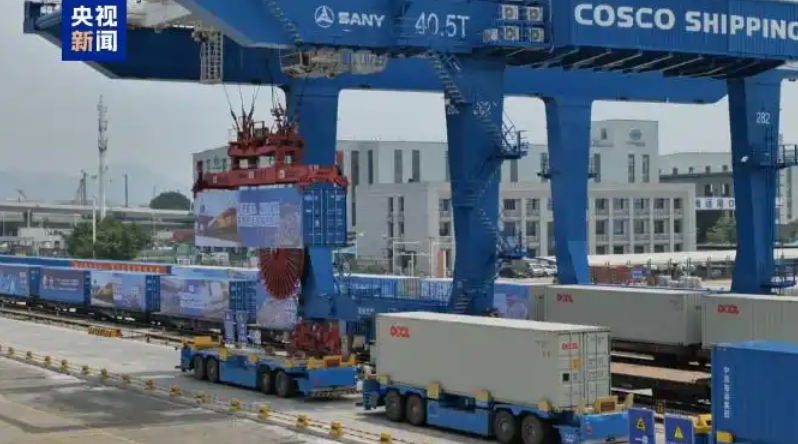
The line is vertically embedded into the core operating area of the terminal, enabling "zero-kilometer" loading for direct vessel loading upon arrival and direct pickup alongside the vessel. Leveraging intelligent coordination between port and rail operations, the logistics cost per container is reduced by over 15%, and transit time is shortened by 2 to 3 days. The line integrates port, railway, and customs authorities, and introduces an innovative mobile checkpoint supervision model that significantly improves customs clearance efficiency. On the landward side, it expands the hinterland coverage; on the seaward side, it connects 148 ports in 55 countries and regions.
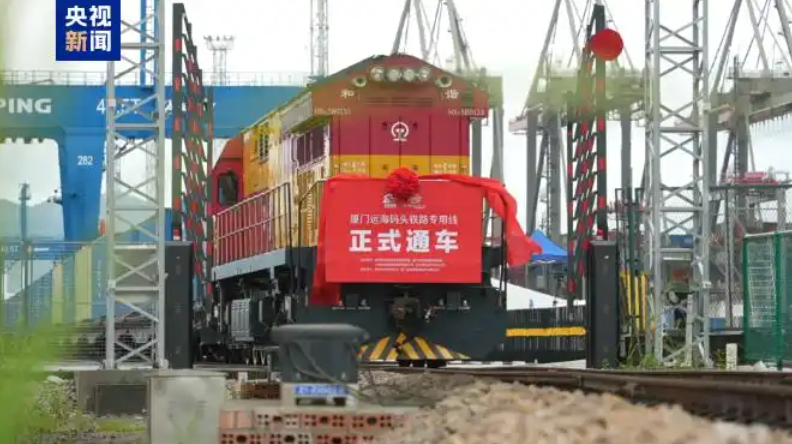
Compared with the traditional three-segment sea-rail intermodal transfer model of "train–yard–vessel," this line achieves direct railway access into the port area and direct "train-to-vessel" connectivity. Leveraging the equipment advantages of China's first automated terminal – Xiamen Yuanhai Terminal – it establishes a new operating system featuring minute-level efficient transfers and zero-kilometer seamless integration, providing hardware support for intelligent "direct vessel loading upon arrival and direct pickup alongside the vessel." With "70-meter reloading and 9-minute transfer" efficiency, it creates a cost-effective, efficient, and smooth land-sea intermodal new system.
Taking advantage of Xiamen Port's dense shipping resources, the dedicated railway line successfully links 21 major ocean-going routes and over 20 inland railway corridors, achieving two-way connectivity between foreign trade maritime networks and inland railway networks, and building a three-dimensional logistics network that reaches global ports on the seaward side and extends to Asia and Europe on the landward side.
Hot News