


“China’s First Listed Private Shipbuilder” Sees Q3 Net Profit Surge 390%, with Earnings Acceleration Materializing
Source:
2026-10-30
On October 28, Guangdong Songfa Ceramics Co., Ltd. (hereinafter “Songfa”) disclosed its 2026 third-quarter report. In the first three quarters, the Company’s net profit attributable to the parent company was RMB 6.673 billion, up 424.87% year on year; net profit excluding non-recurring gains and losses was RMB 6.246 billion, up 807.82% year on year. Order intake, production and delivery, and capacity release advanced in tandem, with earnings accelerating.
Q3 Performance: Profitability Accelerates on a High Base
The report shows that in the first three quarters, the growth rate of Songfa’s net profit excluding non-recurring gains and losses was significantly higher than that of net profit attributable to the parent company, highlighting a main-business-driven profile and improved earnings quality. In the third quarter alone, net profit attributable to the parent company was RMB 3.064 billion, up 390.87% year on year and 21.83% quarter on quarter; net profit excluding non-recurring gains and losses was RMB 2.731 billion, up 377.32% year on year, with the profit level shifting upward. Net margin rose further: the third-quarter net margin climbed to 21.47%, up 4.26 percentage points from 17.21% in the second quarter, further demonstrating the profitability boost from high-value-added vessel types.
Qualitative Change in Operations: Order Mix Optimization and Batch Delivery Materialization
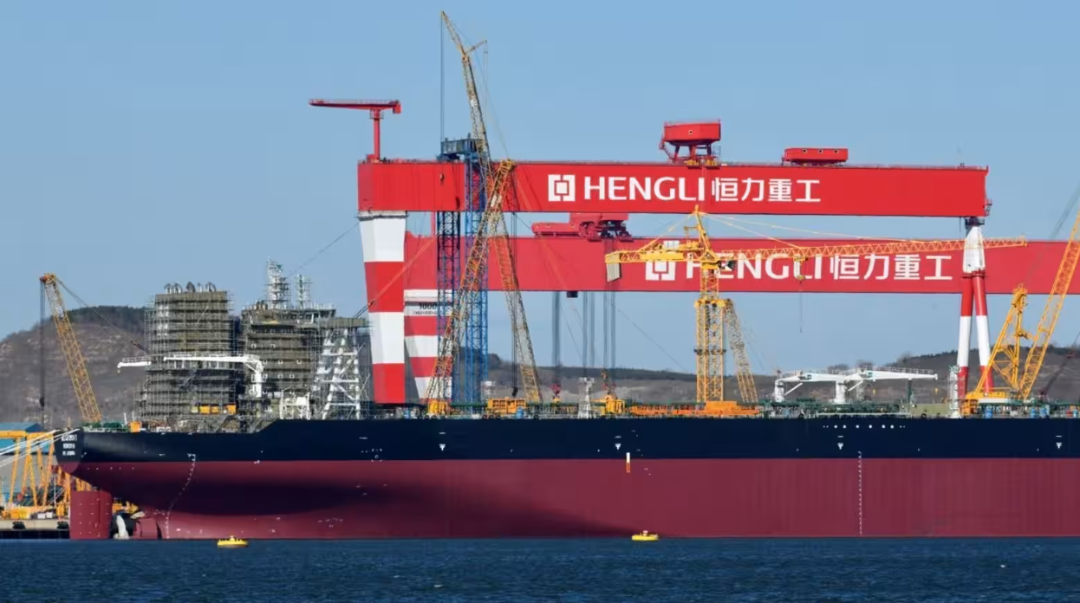
After receiving new orders for 207 vessels in the first half of the year, setting two global records for a single shipyard in terms of order intake scale and vessel-type diversification, Hengli Heavy Industries, the Company’s core shipbuilding asset, maintained its order intake momentum in the third quarter: in July it secured orders for 46 newbuildings, and in August and September it won multiple batch orders for tankers, containerships, and gas carriers.
To date, Hengli Heavy Industries has received cumulative orders for more than 600 vessels, with its delivery schedule extending to 2031. Its order backlog now covers the full spectrum of container, bulk, oil, and gas vessels, with tankers, containerships, and gas carriers together accounting for more than 70%.
In addition, batch deliveries have become routine: 11 vessels were delivered in August, the full-year delivery target is around 90 vessels, and more than 120 vessels are expected to be delivered next year. The faster delivery pace is accelerating turnover across the chain from order intake and production scheduling to delivery and cash collection. With after-sales service support, delivery is becoming the starting point for follow-on orders and repeat purchases by customers.
Capacity Moat: Self-Reliance and Controllability Lock In Delivery Certainty
At present, newbuilding supply and demand are tight, shipyard schedules are saturated, and dry docks and slipways have become scarce resources. Guided by its vision of “becoming a world-class green shipbuilding base,” the Company has formed annual steel processing capacity of 3 million tonnes and annual marine engine production capacity of 180 units. It owns four ultra-large dry docks and world-class slipways, and has full-chain capabilities from independent vessel-type R&D to final assembly and construction, enabling parallel batch construction of high-value-added vessel types such as VLCCs and 10,000-TEU-class containerships, forming the capacity foundation for batch delivery.
On top of capacity, delivery certainty is the real barrier. The Company’s delivery certainty comes from two aspects: first, orderly capacity release, with an efficient production system featuring “parallel construction and centralized undocking” that shortens dock periods and slipway occupancy; second, in-house core components, with marine engines independently produced and supporting production capacity of more than 100 sets per year formed for ultra-large fuel tanks and liquid cargo tanks. At this point, the core ultra-large components—“tanks, engines, and shafts”—all have independent batch production capability. In-house core components not only bring cost advantages but also reduce the impact of external supply chain disruptions on delivery pace.
Currently, Hengli Heavy Industries’ order backlog ranks among the global first tier, and its order mix continues to shift toward high-value-added vessel types. Even if ship prices no longer rise unilaterally, increased deliveries of high-end vessel types are still expected to support an upward shift in the profit center.
Hot News