





Five Major Shipping Lines Have Over 30 Vessels Trapped in the Strait of Hormuz
Source:CNSS
2026-04-30
According to data from Sea Explorer, as of April 28, 2026, the world's top five container liner companies had deployed a combined total of 34 vessels within the Persian Gulf region, reflecting a high concentration of capacity by major carriers in the area.
While these 34 vessels represent only a minority of the 103 ships in the region, their aggregate capacity exceeds 306,000 TEU—accounting for nearly 88 percent of the total 345,000 TEU trapped locally. In other words, the vast majority of stranded capacity belongs to these few leading shipping lines.
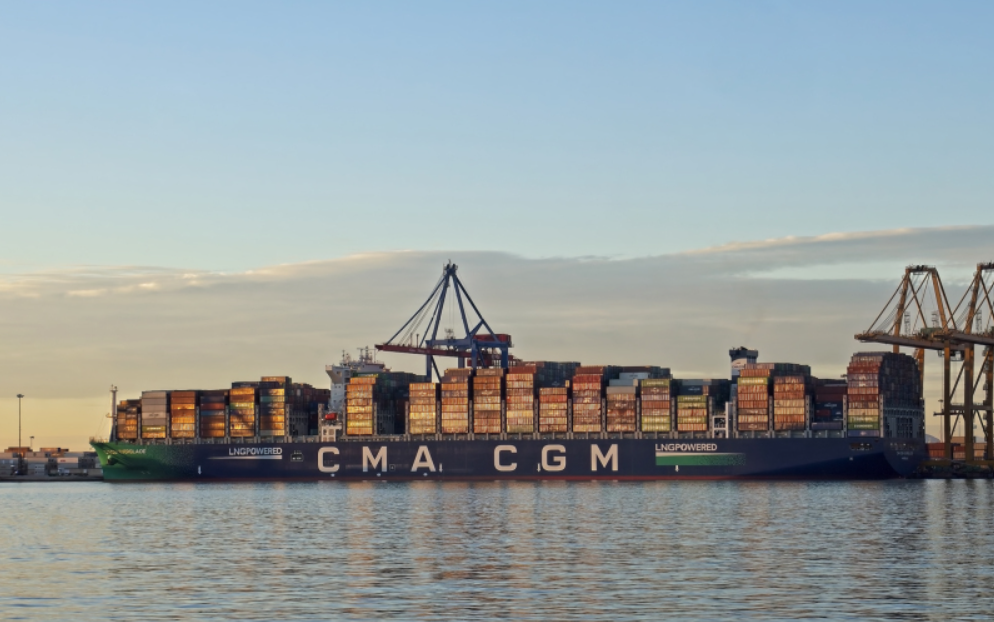
Sources indicate that two of the top five liner companies recently attempted to redeploy vessels out of the Persian Gulf, but the evacuation was halted after Mediterranean Shipping Company (MSC) had two of its ships seized.
This incident has reportedly caused further schedule delays for multiple operators that had planned to transit the Strait of Hormuz. Meanwhile, another shipping giant, Hapag-Lloyd, has begun developing alternative cargo transport plans in response to the current predicament.
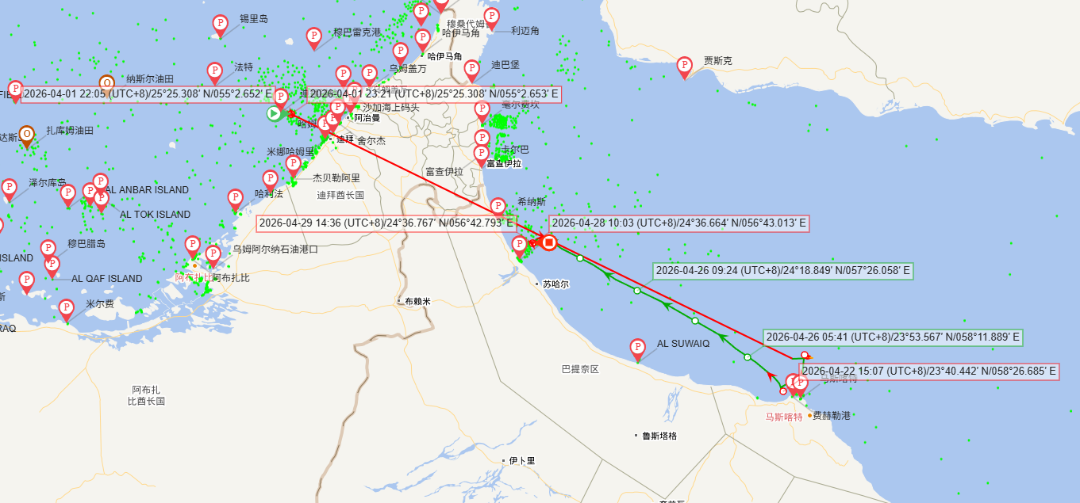
Hapag-Lloyd CEO Rolf Habben Jensen stated that, following limited progress, the company is waiting for a "window of opportunity" to navigate through the Strait of Hormuz. The German carrier has reportedly so far successfully extracted only a single vessel—the Tema Express (IMO: 9238765, 4,253 TEU). This Panamax vessel reappeared on monitoring systems on April 21, after its AIS signal had been absent for a full month on the eastern side of the strait, and is currently berthed at the port of Sohar, Oman.
Carrier Data Shows Varying Levels of Exposure
As of April 28, Sea Explorer data shows a total of 103 containerships in the Persian Gulf region are either at anchor or otherwise restricted.
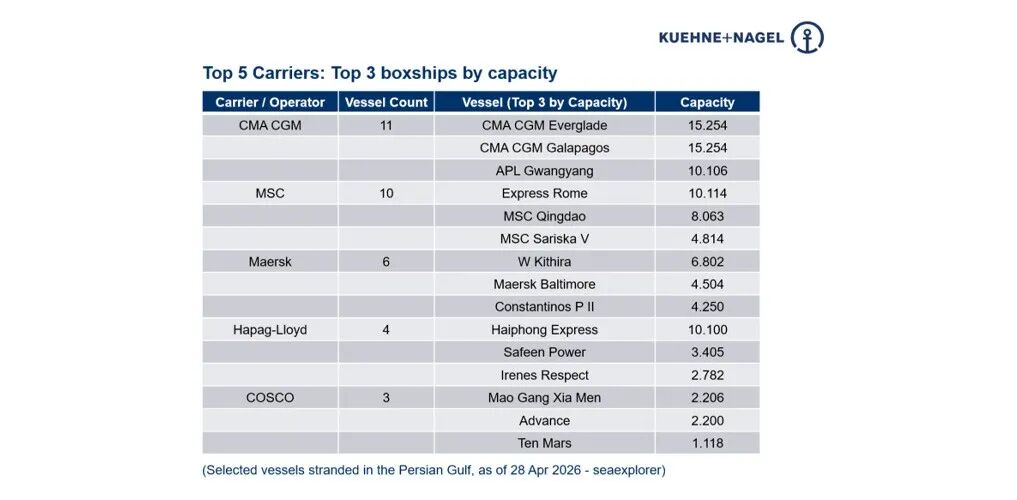
Examining the specific exposure of major carriers, CMA CGM has the highest number of affected vessels at 11, followed closely by MSC with 10. Maersk has 6, Hapag-Lloyd 4, and COSCO SHIPPING 3 vessels trapped.
Among these vessels from the global top five operators, the three largest by capacity are the 15,254 TEU CMA CGM vessels CMA CGM Everglade (IMO: 9894985) and CMA CGM Galapagos (IMO: 9894997), along with MSC's 10,114 TEU Express Rome (IMO: 9484936).
Carriers Develop Alternative Transport Plans
Industry observers reveal that if the current situation remains unresolved, the shipping industry could face a cascade of operational repercussions in the coming months. The Journal of Commerce, citing analysis in a recent report, notes that over the long term, a potential oil shortage could "significantly impact global manufacturing, thereby dampening container freight volumes."
Rolf Habben Jensen stated publicly that the company has already reached agreement on alternative transport plans, and that by now "92 percent of the trapped cargo has been assigned a confirmed delivery date." Sources indicate these plans may include routine contingency measures such as blank sailings, voyage cancellations, and route diversions.
On the other hand, some industry analysts point out that the current crisis could spur increased investment in port and inland infrastructure across the Middle East, aimed at creating alternative transport corridors that bypass critical chokepoints.
Current Market Impact
Despite the severe impact the Hormuz crisis has had on regional vessel movements, shipping consultancy Drewry believes the current market volatility is not comparable to the freight rate spikes seen during the COVID-19 pandemic.
Philip Damas, head of Drewry's logistics practice, stated: "Unlike the air freight market, the container shipping market has not seen a significant capacity reduction since the outbreak of the Iran war, apart from capacity in and out of the Persian Gulf."
Overall, industry observers note that while regional disruptions are severe, the broader market environment has not yet seen the level of transformation witnessed during previous global crises.
Hot News